.png)
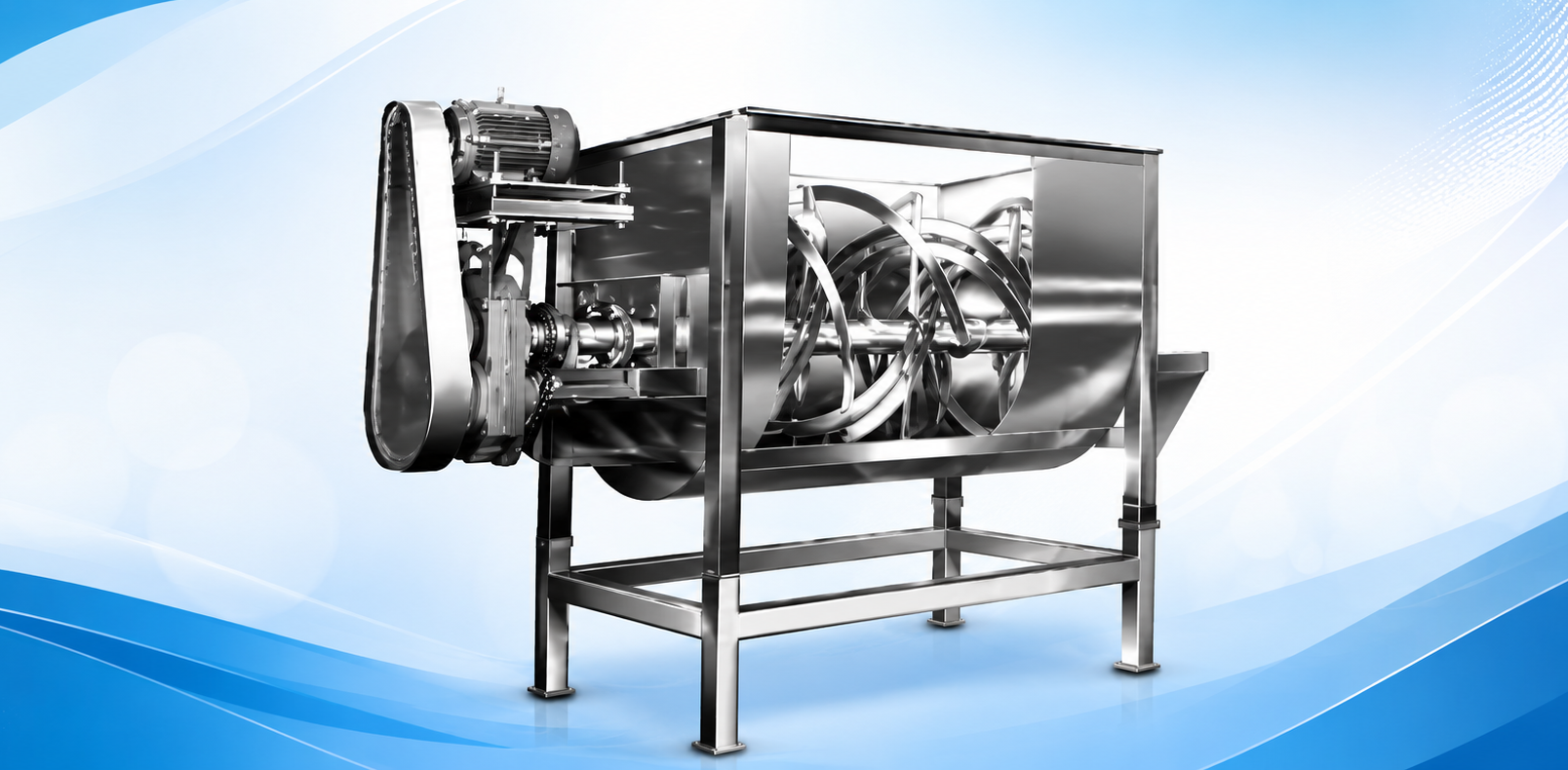
Achieving a well-mixed batch is important for businesses involved in material preparation and industrial production. Ribbon Blender Manufacturer In Goa is a useful search for manufacturers looking for machinery to blend suitable dry powders, granules, and bulk ingredients. Rama GMP Machineries offers industrial ribbon blender solutions that can be evaluated according to individual process requirements. This equipment generally uses a horizontal mixing trough and a rotating ribbon agitator to move materials within the vessel and support ingredient distribution throughout the batch.
Before selecting a ribbon blender, businesses should consider the nature of the material, particle size, bulk density, required batch volume, mixing time, and cleaning procedure. Other important factors include the vessel's construction material, drive system, ribbon arrangement, and discharge mechanism. Depending on material compatibility and process requirements, ribbon blenders may be suitable for applications involving chemical mixtures, agricultural ingredients, mineral powders, food-processing materials, and other dry formulations. Reviewing these specifications helps buyers compare machine options based on practical production needs rather than price alone.
Businesses operating in Panaji, Vasco da Gama, Margao, Ponda, Mapusa, and other parts of Goa can assess ribbon blending equipment according to their manufacturing setup and intended application. Rama GMP Machineries can discuss relevant machine configurations when you provide details about your material, required output per batch, operating conditions, and installation space. Whether you are planning a new processing facility or reviewing equipment for an existing production line, contact our team to enquire about ribbon blender specifications, pricing, and delivery availability for your location in Goa.
Enquire About Ribbon Blender MachineryReliable mixing equipment helps manufacturers prepare consistent batches, combine compatible ingredients, and manage material processing operations efficiently. Rama GMP Machineries offers industrial blending machinery solutions for businesses seeking equipment suited to their production requirements. As a Ribbon Blender Manufacturer In Goa, the company provides information to help buyers evaluate machine configurations according to material properties, batch volume, mixing objectives, agitator design, and discharge arrangements. Selecting a suitable ribbon blender requires an understanding of the complete manufacturing process, from raw material loading to blended product transfer. A well-planned equipment choice can help businesses align their mixing operations with their production workflow and available factory space.
Before selecting a machine, manufacturers should identify the ingredients to be processed, desired batch quantity, production frequency, cleaning needs, and operating environment. Factors such as material flow behaviour, contact-part construction, available installation space, and discharge requirements should also be considered. Reviewing these details helps businesses in Goa compare equipment specifications and shortlist a ribbon blender that suits their intended application.
Mixing different dry ingredients requires equipment designed around the behaviour of the materials and the desired result. A ribbon blender typically features a horizontal trough with a rotating ribbon assembly that moves compatible materials through the mixing chamber. This movement helps distribute ingredients across the batch during the blending cycle. Businesses searching for a Ribbon Blender Manufacturer In Goa can evaluate this type of machinery for suitable powder mixing, granule blending, and bulk ingredient preparation processes.
The expected mixing performance depends on several factors, including particle size, bulk density, ingredient ratios, batch fill level, agitator speed, and mixing duration. Manufacturers in Panaji, Vasco da Gama, Margao, Ponda, and other industrial areas of Goa should also consider how raw materials will enter the machine and how the finished blend will move to the next production stage. Suitable loading access, vessel dimensions, and discharge positioning can make equipment integration easier to plan.
Depending on material compatibility and machine specifications, ribbon blenders may be considered for applications involving chemical powders, agricultural ingredients, mineral blends, food-processing materials, and other suitable dry formulations. Buyers should confirm the required construction material, cleaning procedure, and relevant hygiene or safety requirements before selecting equipment for a specific product or industry.
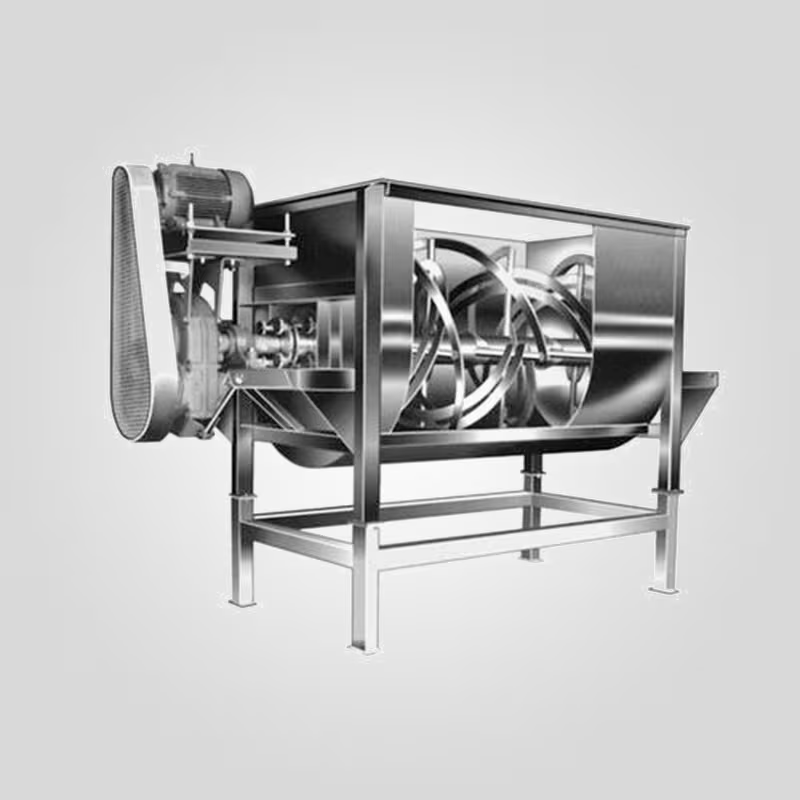
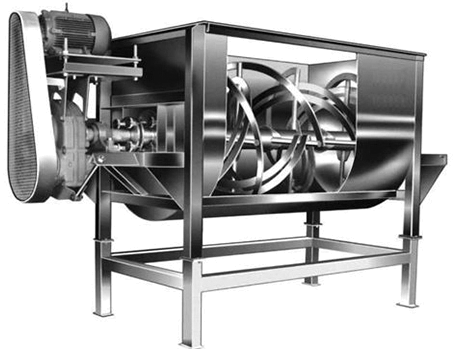
Machine capacity should be selected according to the quantity of material processed in each batch, the required daily output, and the characteristics of the ingredients. Nominal vessel volume and usable working capacity are not necessarily the same, so buyers should confirm the recommended operating fill level for their application. Matching the blender to the production target helps businesses plan batch schedules, material loading, and downstream processing more effectively.
When comparing options from a Ribbon Blender Manufacturer In Goa, review the working volume, vessel construction, ribbon geometry, motor rating, gearbox specifications, and discharge mechanism. The material in contact with the product should be appropriate for the ingredients and process conditions. Easy inspection, cleaning access, and routine maintenance should also be included in the equipment evaluation, particularly where frequent product changeovers are required.
Factory planning involves more than selecting the machine size. Businesses should check the available floor area, loading height, electrical supply, operator access, equipment movement, and the route used to transfer blended material to subsequent machinery. Considering these installation details before purchasing can help identify layout constraints and support better coordination between the ribbon blender and the rest of the production line.
A suitable blending machine should be assessed according to the entire production requirement rather than capacity or purchase price alone. Ingredient behaviour, desired blend quality, cleaning frequency, operating conditions, and production scheduling all influence equipment selection. Preparing these details in advance can make technical discussions and quotation comparisons more useful.
Planning a new manufacturing setup or upgrading an existing mixing process in Goa? Connect with Rama GMP Machineries to discuss your requirements with a Ribbon Blender Manufacturer In Goa. Share the material type, expected batch quantity, target output, installation conditions, and any special processing needs. These details can help determine which machine configurations are worth evaluating for powder blending, compatible granule mixing, and bulk material preparation. Confirm the final technical specifications, quotation, delivery schedule, and installation arrangements with the company before placing your order.
Industrial production often requires specialized machinery to combine dry materials, prepare batches, and maintain consistency throughout the manufacturing process. Rama GMP Machineries offers ribbon blending equipment solutions for businesses assessing their industrial mixing requirements. As a Ribbon Blender Manufacturer In Goa, the company helps buyers explore suitable machine configurations according to the nature of the ingredients, expected batch quantity, mixing objectives, and factory setup. Important selection factors include the design of the mixing chamber, ribbon arrangement, motor and gearbox specifications, product-contact surfaces, and discharge mechanism. Reviewing these details helps manufacturers identify equipment options that align with their intended application and production workflow.
Ribbon blending machinery uses a rotating agitator inside a horizontal vessel to move compatible ingredients during the mixing cycle. Depending on the material properties and machine configuration, this type of equipment may be suitable for blending dry powders, granules, and other bulk ingredients used in different industrial processes. Before choosing a machine, businesses should evaluate particle size, bulk density, ingredient proportions, material flow, required mixing duration, and the desired characteristics of the final blend. Cleaning access, construction material, and operating conditions are also important considerations, particularly when production involves multiple formulations or frequent batch changes.
Businesses across Panaji, Margao, Vasco da Gama, Ponda, Mapusa, and other parts of Goa can begin planning their blending equipment by identifying daily production targets, batch frequency, material loading methods, and available installation space. These details help when assessing working capacity, equipment dimensions, operator access, and the transfer of blended materials to the next stage of production. Rama GMP Machineries can discuss relevant technical requirements and machine options for your application. Contact the team to enquire about ribbon blender specifications, pricing, and delivery availability for your manufacturing facility in Goa.
Efficient powder processing starts with selecting mixing equipment that matches the characteristics of the materials and the demands of the production line. Rama GMP Machineries provides industrial machinery solutions for businesses exploring suitable blending equipment for their operations. As a Ribbon Blender Manufacturer In Goa, the focus is on helping buyers assess important machine parameters, including vessel design, ribbon arrangement, batch working volume, drive specifications, and material discharge requirements. A clear understanding of these factors allows manufacturers to evaluate equipment according to their production objectives, product properties, and available factory space.
Ribbon blenders use a rotating ribbon assembly inside a horizontal mixing vessel to move and combine suitable dry ingredients. The quality of the resulting blend depends on several operating conditions, including particle characteristics, bulk density, ingredient ratios, loading level, and mixing time. Businesses looking for a Ribbon Blender Manufacturer In Goa should assess these process variables before choosing a machine. Matching the blender configuration to the intended application helps establish suitable mixing conditions for routine production batches.
Different manufacturing industries handle different types of powders, granules, and dry bulk ingredients. Depending on material compatibility and equipment configuration, ribbon blending systems may be considered for chemical processing, agricultural formulations, selected food ingredients, mineral products, and other suitable applications. Product sensitivity, cleaning frequency, contact-surface requirements, and contamination control should be reviewed before finalizing the machinery. Sharing these details helps buyers evaluate whether a particular blender is appropriate for their process.
Selecting a ribbon blender requires more than estimating the quantity of material processed in one cycle. Manufacturers should consider the usable mixing volume, material bulk density, expected batch frequency, ribbon geometry, motor and gearbox arrangement, and the method used to empty the vessel. These details help establish a practical equipment specification for the intended production output. Businesses in Goa can prepare their batch requirements and material details before discussing suitable ribbon blender configurations with the supplier.
A new blending machine should fit smoothly into the existing manufacturing arrangement. Installation planning may involve floor space, material feeding, product collection, electrical connections, operator accessibility, and movement of ingredients between processing stages. Buyers should also review access for inspection, cleaning, and routine maintenance. For manufacturing facilities in Panaji, Vasco da Gama, Margao, Ponda, Mapusa, and other parts of Goa, considering these practical requirements early can support better equipment planning and a more organized production workflow.
The right industrial blender should be selected according to the ingredients being processed, the desired batch output, and the operating requirements of the manufacturing unit. Before requesting a quotation, prepare details about material properties, batch size, production frequency, cleaning needs, discharge preferences, and available installation space. Rama GMP Machineries can discuss relevant machine specifications and equipment options based on your application requirements. If you are looking for a Ribbon Blender Manufacturer In Goa, contact the team to enquire about suitable machine configurations, technical details, pricing, and delivery availability for your business.
Choosing the right industrial mixing machine can help manufacturers organize their production processes and handle compatible dry ingredients more efficiently. Factors such as raw material characteristics, required batch volume, mixing objectives, and equipment layout play an important role in selecting a suitable blending system. Rama GMP Machineries offers machinery solutions for businesses evaluating industrial powder mixing equipment. As a Ribbon Blender Manufacturer In Goa, the company can discuss relevant machine configurations based on application requirements, vessel construction, ribbon assembly, drive mechanism, and product discharge arrangements. Evaluating these specifications helps businesses make informed decisions when planning a new production unit or improving an existing manufacturing setup.
Chemical manufacturers may need specialized equipment to combine compatible dry powders, processing ingredients, and granular compounds in controlled batches. A ribbon blender can be considered for applications where the material properties and mixing requirements are suitable for this type of machinery. Before selecting a system, businesses should assess chemical compatibility, material abrasiveness, required working volume, ribbon arrangement, and the construction of product-contact components. Motor and gearbox specifications, discharge access, and cleaning requirements should also be reviewed to identify a configuration that fits the intended manufacturing process.
Food manufacturing operations may require mixing machinery for suitable dry ingredients, seasoning combinations, powdered mixes, and other compatible formulations. The selected blender should match the ingredients being processed and the hygiene practices followed at the facility. Important considerations include product-contact material, access for cleaning and inspection, batch loading, discharge arrangements, and the prevention of unwanted cross-contamination between formulations. Businesses should communicate their application and cleaning requirements before choosing a machine. This approach helps determine whether a particular ribbon blender configuration is appropriate for the intended process.
Agricultural processing units and bulk material manufacturers may work with dry formulations, mineral powders, and granular ingredients that require batch blending. For suitable materials, ribbon mixing machinery can be evaluated according to particle size, bulk density, flow characteristics, and the required composition of the final mixture. Equipment planning should also cover working capacity, ribbon design, drive requirements, material feeding, and product collection after mixing. Reviewing these details before purchase helps businesses compare suitable machine options and plan how the blender will fit into their existing processing and packaging workflow.
Planning to install industrial blending equipment for your manufacturing facility in Goa? Rama GMP Machineries can discuss your requirements based on the type of material, expected batch quantity, production frequency, cleaning procedures, and available installation space. Businesses operating in Panaji, Vasco da Gama, Margao, Ponda, Mapusa, and nearby industrial areas can prepare these details to help evaluate relevant machinery options. When comparing a Ribbon Blender Manufacturer In Goa, consider machine construction, working volume, drive specifications, discharge design, and suitability for your application. Contact Rama GMP Machineries to enquire about available configurations, technical specifications, pricing, and delivery options for your business.
Modern manufacturing requires suitable equipment to prepare dry ingredients for further processing, blending, and packaging. Rama GMP Machineries offers industrial ribbon blender machinery for businesses evaluating equipment for their material processing requirements. As a Ribbon Blender Manufacturer In Goa, the company helps buyers assess machine capacity, mixing vessel design, ribbon assembly, drive specifications, and discharge arrangements according to their intended application.
Every production process has its own material handling requirements. Particle size, bulk density, ingredient proportions, material flow, and sensitivity to moisture can influence the selection of a suitable blender. Manufacturers should also establish their target batch quantity, production frequency, operating conditions, and available floor space before deciding on equipment specifications.
Ribbon blending machinery may be suitable for compatible dry ingredients used in selected chemical formulations, agricultural products, mineral processing, and food-related manufacturing. The suitability of a particular machine depends on the material characteristics, required mixing outcome, product-contact requirements, and cleaning procedures. A proper application assessment helps buyers identify relevant equipment options.
Businesses planning manufacturing operations in Panaji, Margao, Vasco da Gama, Ponda, Mapusa, and other parts of Goa should consider how the blender will connect with their existing production workflow. Material feeding, batch discharge, operator access, and maintenance clearance are important installation factors. If you are looking for a Ribbon Blender Manufacturer In Goa, contact Rama GMP Machineries to discuss your application, machine requirements, and relevant equipment specifications.
A well-planned mixing stage helps manufacturers prepare batches according to the requirements of their production process. Rama GMP Machineries provides industrial machinery solutions for businesses assessing ribbon blending equipment. When choosing a Ribbon Blender Manufacturer In Goa, buyers should evaluate the machine's working volume, internal agitator arrangement, construction materials, drive system, and compatibility with the ingredients being processed.
A conventional ribbon blender contains a horizontal mixing vessel fitted with an internal ribbon agitator and a drive assembly. During operation, the agitator moves suitable materials within the chamber to promote distribution across the batch. The outcome depends on the product formulation, material flow characteristics, loading quantity, equipment geometry, and selected operating conditions.
Before requesting a quotation, manufacturing teams should determine their expected batch size and the number of batches required during a production shift. Information about bulk density, ingredient characteristics, desired blend quality, and cleaning frequency can help establish the machine's technical requirements. The installation area should also accommodate loading, discharge, inspection, and servicing.
Goa's manufacturing businesses can have different requirements depending on the products they produce and the processes they operate. A unit handling chemical ingredients may require different construction and cleaning provisions from a facility processing compatible agricultural or food-related materials. Buyers should communicate their actual application requirements before finalising the blender configuration.
Rama GMP Machineries helps buyers review the factors involved in selecting industrial blending machinery for their projects. Share details about your raw materials, batch volume, production targets, and factory layout to make your enquiry more specific. Contact us if you need a Ribbon Blender Manufacturer In Goa for a new installation or an existing production facility.
Selecting industrial mixing machinery starts with understanding the materials and the results expected from the production process. Rama GMP Machineries helps businesses review the equipment considerations associated with ribbon blending. When comparing a Ribbon Blender Manufacturer In Goa, buyers should consider application suitability, machine configuration, production capacity, and operating requirements rather than relying on a single specification.
Ribbon blenders are designed to move compatible ingredients through a horizontal vessel using a rotating internal assembly. The movement of materials depends on the ribbon design, product properties, loading level, and operating cycle. Establishing the required batch size and blend characteristics helps determine the features that should be reviewed before selecting a machine.
The required blender capacity should correspond with the amount of material processed during each cycle. Buyers should review usable working volume, ingredient density, loading requirements, batch frequency, and daily production targets. Considering the complete batch cycle helps manufacturers estimate the capacity required for their production schedule.
Ribbon geometry influences how materials circulate inside the mixing chamber. Particle characteristics, ingredient ratios, density differences, and flow behaviour can affect the mixing process. These properties should be discussed with the supplier when determining whether a proposed configuration is suitable for the intended formulation.
The material used to construct the vessel and product-contact components should suit the ingredients and operating environment. Corrosion potential, abrasive properties, cleaning methods, and product handling requirements may influence the specification. Buyers should confirm the proposed construction material before placing an equipment order.
Ribbon blenders may be evaluated for compatible powders and granules used in selected chemical, agricultural, mineral, and food-related processes. Each application has different material handling, hygiene, and mixing requirements. Reviewing the ingredients and intended use helps determine whether this type of equipment is appropriate.
The discharge arrangement should match the material's flow behaviour and the next production stage. Consider outlet position, product collection, transfer arrangements, and access for removing residues. Cleaning and inspection procedures should also be assessed according to the product and supplier's operating recommendations.
Installation planning should include floor space, electrical requirements, loading access, operator clearance, and room for maintenance. Buyers should also consider the positioning of connected hoppers, conveyors, and downstream equipment. Reviewing the layout before installation helps coordinate the blender with the overall production line.
A clear equipment specification helps manufacturers compare suitable industrial mixing options. Rama GMP Machineries can discuss relevant machine features according to the intended application and operating conditions. If you are searching for a Ribbon Blender Manufacturer In Goa, share your material details, expected batch quantity, construction preferences, and installation requirements to enquire about suitable equipment configurations.
Different production processes require different approaches to handling and combining dry ingredients. Rama GMP Machineries offers industrial ribbon blender machinery for businesses evaluating suitable batch mixing equipment. As a Ribbon Blender Manufacturer In Goa, the company helps buyers examine vessel dimensions, agitator configuration, working capacity, drive requirements, and discharge arrangements for their planned manufacturing applications.
Ribbon blending uses an internal rotating assembly to move materials within a horizontal chamber. This design may be considered for suitable dry formulations that require batch mixing. However, machine selection should account for the ingredients' physical characteristics, density variation, flow behaviour, and the desired properties of the finished mixture.
The practical operation of a blender also depends on material loading, product collection, inspection access, and cleaning arrangements. Manufacturers should assess the machine's location in relation to storage systems, feeding equipment, and the next processing stage. Reviewing these factors helps define an equipment arrangement that fits the facility's workflow.
Manufacturers combining multiple dry ingredients should assess whether the materials are suitable for ribbon blending. Ingredient ratios, particle sizes, bulk density, loading quantity, and desired blend characteristics can influence the machine requirements. Reviewing these details helps establish a suitable basis for equipment selection and process planning.
Chemical production may involve powders and granular compounds with specific compatibility and handling requirements. Equipment construction, product-contact surfaces, cleaning provisions, and drive specifications should be considered for the intended formulation. The final configuration should be checked against the material properties and operating conditions.
Selected agricultural formulations may require dry ingredients to be combined before storage, further processing, or packaging. Buyers should consider material flow, density, batch volume, and discharge behaviour when evaluating ribbon blender machinery. The equipment should be appropriate for the formulation and the intended production process.
Mineral-based materials and industrial powders may differ considerably in density, particle size, and abrasiveness. These characteristics can influence the construction and mixing requirements of the equipment. Buyers should review the material properties and expected operating conditions before selecting a ribbon blender for the application.
Suitable dry food ingredients and premixes may require blending equipment that fits the facility's hygiene and cleaning procedures. Product-contact materials, ingredient sensitivity, inspection access, and residue removal should be considered. Application suitability and any relevant food-processing requirements should be confirmed before purchase.
Ribbon blenders need to connect practically with the rest of the production process. Storage hoppers, ingredient feeding, discharge outlets, conveyors, and packaging equipment should be considered during layout planning. Proper coordination helps businesses plan material movement and operator access around the mixing station.
Rama GMP Machineries helps buyers assess ribbon blender specifications for their intended manufacturing processes. If you need a Ribbon Blender Manufacturer In Goa, discuss your ingredients, batch requirements, construction preferences, and plant layout to identify relevant equipment considerations for your project.
Selecting machinery for an industrial mixing operation requires an understanding of the product, production targets, and installation conditions. Buyers need to assess how a blender will handle their ingredients and fit within the existing or planned manufacturing line. Rama GMP Machineries helps businesses review relevant ribbon blender specifications. When evaluating a Ribbon Blender Manufacturer In Goa, a process-based assessment can help identify the features most relevant to the intended application.
Ribbon blender equipment generally combines a horizontal vessel, an internal ribbon assembly, a drive mechanism, and a discharge arrangement. The suitability of the equipment depends on the formulation, batch size, desired mixing outcome, and operating conditions. Buyers should evaluate these components as part of the complete manufacturing setup.
Start by documenting the raw ingredients and the required outcome of the mixing process. Particle size, bulk density, ingredient ratios, flow behaviour, and moisture sensitivity may affect equipment selection. This information helps establish whether ribbon blending is appropriate for the planned application.
Machine capacity should reflect the intended batch quantity and production schedule. Buyers should consider usable working volume, material density, loading time, mixing duration, and discharge time. These factors provide a more realistic basis for assessing the required equipment capacity.
Vessel and product-contact materials should be compatible with the ingredients and operating environment. Corrosion, abrasion, cleaning practices, and product handling requirements may influence the specification. Confirming the appropriate construction helps ensure the proposed equipment fits the intended use.
The blender should fit the material flow through the production line. Buyers should examine feeding height, outlet position, transfer methods, and the location of connected machinery. Planning these connections in advance helps coordinate the mixing process with subsequent production activities.
Maintenance access should be considered during the equipment selection process. Operators should follow supplier instructions for cleaning, inspection, and servicing of the ribbon assembly, drive components, bearings, seals, and discharge system. Appropriate maintenance planning supports the ongoing operation of the equipment.
The installation site should provide suitable space for operation, material loading, discharge, and maintenance. Electrical requirements, operator movement, and connections to feeding and transfer systems should be reviewed together. This helps determine whether the proposed machine arrangement fits the factory layout.
A detailed application review helps manufacturers make more informed equipment decisions. Rama GMP Machineries can discuss the factors relevant to your ribbon blender requirements. If you are searching for a Ribbon Blender Manufacturer In Goa, provide your material information, batch size, construction requirements, and installation details to enquire about suitable machine options.
Powder processing equipment should be selected according to the properties of the ingredients and the intended production outcome. Rama GMP Machineries offers ribbon blender machinery for businesses planning suitable dry mixing operations. As a Ribbon Blender Manufacturer In Goa, the company helps buyers evaluate working volume, vessel design, ribbon arrangement, drive specifications, and discharge requirements for their applications.
Material circulation inside a ribbon blender is influenced by the internal agitator, vessel geometry, loading level, and ingredient properties. Manufacturers should identify their desired mixing result and review the particle sizes, ingredient proportions, density differences, and flow characteristics of the formulation. These details help establish the equipment requirements for a particular batch process.
Other practical considerations include product-contact surfaces, cleaning access, motor and gearbox requirements, material loading, and finished-batch collection. Installation planning should allow sufficient room for inspection and routine servicing. Considering these features together helps buyers assess the suitability of a proposed machine.
Manufacturing facilities may need ribbon blending equipment for a variety of compatible dry materials. Rama GMP Machineries helps buyers explore machinery options for their intended production processes. When looking for a Ribbon Blender Manufacturer In Goa, businesses should define their raw materials, target batch volume, production frequency, and desired blend characteristics.
Depending on the ingredients and machine configuration, ribbon blenders may be considered for selected chemical formulations, agricultural products, mineral materials, and compatible food-related applications. Each use requires an individual assessment of material compatibility, handling requirements, cleaning procedures, and operating conditions before equipment is selected.
Production planning should also account for how materials move through the facility. Ingredient storage, feeding arrangements, blender discharge, transfer systems, and packaging equipment should be considered as part of one workflow. A coordinated layout helps businesses plan the mixing station around their other manufacturing activities.
Are you planning a new mixing facility or reviewing machinery requirements for an existing manufacturing unit in Goa? Contact Rama GMP Machineries to discuss your raw materials, expected batch quantity, equipment specifications, and installation conditions.
Industrial blending requirements depend on the formulation, quantity processed per batch, and production schedule. Rama GMP Machineries offers ribbon blender machinery for manufacturers evaluating suitable dry mixing systems. If you are comparing a Ribbon Blender Manufacturer In Goa, defining the material properties and expected mixing result is an important first step.
A ribbon blender uses a rotating internal assembly to move compatible ingredients through a horizontal chamber. The required configuration depends on product flow, particle size, bulk density, loading quantity, and the intended operating cycle. These details should be reviewed to determine whether the equipment suits the application.
Machine assessment should also include the vessel dimensions, drive system, discharge arrangement, construction material, and access for cleaning and maintenance. Buyers should consider how the blender will fit into the available floor space and connect with the rest of the production equipment.
Comparing ribbon blending machinery involves reviewing more than the nominal vessel capacity. Buyers should examine usable working volume, agitator configuration, motor and gearbox specifications, product-contact material, and discharge design. When considering a Ribbon Blender Manufacturer In Goa, these features should be matched to the actual production requirements.
Suitable applications may include selected dry materials used in chemical, agricultural, mineral, and food-related manufacturing. Requirements for material handling, cleaning, hygiene, and batch consistency differ according to the formulation. Buyers should confirm application suitability and relevant specifications before purchasing machinery.
Routine operation should follow the supplier's instructions for loading, mixing, cleaning, and inspection. Maintenance planning should address the drive assembly, ribbon components, bearings, seals, and discharge system as specified for the equipment. These procedures should be incorporated into the plant's regular operating practices.
A blending machine needs to work alongside material storage, feeding, transfer, and packaging arrangements. Rama GMP Machineries helps businesses evaluate ribbon blender machinery for suitable batch mixing applications. If you need a Ribbon Blender Manufacturer In Goa, begin by outlining the ingredients, expected output, batch frequency, and operating conditions of your production facility.
The blending process may involve combining several compatible dry ingredients before further processing or packaging. Ingredient proportions, particle characteristics, density variation, and desired blend quality should be considered when evaluating the mixing requirements. These factors help guide equipment selection and operating plans.
The installation layout should provide practical access for feeding materials, collecting the finished batch, and carrying out routine inspections. Buyers should also assess outlet clearance, conveyors, hoppers, operator movement, and nearby machinery. Planning these details helps coordinate the blender with the complete production line.
Industrial mixing equipment should match the characteristics of the materials and the requirements of the production process. Rama GMP Machineries offers ribbon blender machinery for businesses evaluating dry powder and granule mixing applications. As a Ribbon Blender Manufacturer In Goa, the company helps buyers review relevant equipment specifications and practical installation considerations.
Ribbon blending uses a rotating assembly to move compatible ingredients within a horizontal mixing vessel. Whether this equipment suits a particular formulation depends on particle size, bulk density, ingredient proportions, flow behaviour, and the desired characteristics of the finished blend. These factors should be considered before deciding on a machine configuration.
Working capacity is another important selection factor. Buyers should consider the amount processed per batch, production frequency, loading time, mixing duration, and finished-product discharge time. Reviewing the complete cycle provides a more realistic understanding of the capacity required for the manufacturing schedule.
The vessel and internal components should be appropriate for the material being processed. Product-contact requirements, corrosion potential, abrasive characteristics, and cleaning procedures can influence construction decisions. Buyers should discuss these factors with the supplier to confirm the proposed equipment specification for their application.
A suitable installation arrangement should support material loading, operator access, batch collection, and maintenance. The location of storage hoppers, feeding systems, conveyors, and downstream machinery should be reviewed before the blender is positioned. This helps businesses plan how materials will move through the complete production process.
Cleaning and servicing requirements should also be included in the operating plan. Operators should follow the supplied instructions for equipment operation, inspection, cleaning, and maintenance. The ribbon assembly, drive components, bearings, seals, and discharge arrangement should be checked according to the applicable maintenance guidance.
Equipment requirements can change significantly between different materials and formulations. A configuration suitable for one product may need modification or further assessment for another application. Reviewing the product characteristics and process objectives helps manufacturers focus on the specifications that matter to their operation.
Rama GMP Machineries can discuss the considerations involved in selecting ribbon blender machinery for your manufacturing project. If you are searching for a Ribbon Blender Manufacturer In Goa, share your raw material details, batch requirements, construction preferences, and installation conditions to enquire about relevant equipment options.
Consistent batch preparation starts with equipment selected for the intended product and operating conditions. Rama GMP Machineries offers ribbon blender machinery for businesses evaluating suitable dry ingredient mixing systems. As a Ribbon Blender Manufacturer In Goa, the company helps buyers assess capacity, agitator design, construction requirements, and discharge arrangements for their processes.
A ribbon blender typically combines a horizontal vessel with a rotating ribbon assembly and a drive mechanism. Equipment selection should account for working volume, ingredient characteristics, mixing objectives, and operating conditions. Product-contact surfaces, cleaning access, and the method of removing the finished batch should also be considered.
Depending on material compatibility, ribbon blending may be evaluated for selected chemical products, agricultural formulations, mineral powders, and suitable dry food ingredients. Each application requires its own assessment of the formulation, handling process, and desired mixing outcome before a machine is selected.
Businesses setting up new production facilities or reviewing existing machinery should document their raw material properties, expected batch quantities, production frequency, and installation arrangements. Manufacturers in Panaji, Margao, Vasco da Gama, Ponda, Mapusa, and other parts of Goa can contact Rama GMP Machineries to discuss relevant equipment specifications for their proposed applications.
Industrial mixing equipment should be chosen after reviewing the material properties and the production result required from each batch. Rama GMP Machineries offers ribbon blender machinery for businesses assessing suitable dry mixing applications. If you are looking for a Ribbon Blender Manufacturer In Goa, start by defining the ingredients, batch quantity, operating conditions, and installation requirements.
Information about particle size, bulk density, ingredient ratios, material flow, and moisture sensitivity can help establish the equipment requirements. Buyers should also review working volume, ribbon arrangement, drive specifications, construction material, and discharge design. These details provide a practical basis for discussing machinery options with the supplier.
Ribbon blenders may be considered for compatible dry materials used in selected chemical, agricultural, mineral, and food-related applications. The appropriate equipment depends on the specific formulation and required handling conditions. Cleaning procedures and product-contact requirements should be reviewed before confirming the proposed machine configuration.
Production layout is another important consideration. The blender should have sufficient space for material feeding, finished-batch collection, operator movement, and servicing. Buyers should also examine connections to storage systems, conveyors, and downstream processing equipment when planning the installation.
Selecting the right industrial blender involves comparing the technical requirements of the application with the available equipment configurations. Rama GMP Machineries helps buyers review relevant ribbon blender features. Businesses searching for a Ribbon Blender Manufacturer In Goa should consider capacity, agitator arrangement, construction material, drive requirements, and compatibility with the intended product.
Buyers may need to compare vessel dimensions, usable working volume, discharge arrangements, and construction options before making a decision. The choice of construction material should reflect the product, operating environment, and applicable contact-surface requirements. Final specifications should be confirmed for the intended application.
Not every blender design is suitable for every formulation. Material flow, particle size, density variation, cleaning needs, and desired blend characteristics should be considered during equipment assessment. This helps buyers concentrate on the specifications relevant to their process.
Whether you are planning a new manufacturing unit or evaluating machinery for an existing facility, Rama GMP Machineries can discuss your equipment requirements. Share your ingredient details, expected batch volume, construction preferences, and production objectives to enquire about ribbon blender options for your project in Goa.
Explore answers to common questions about ribbon blender machinery, powder mixing applications, working capacity, machine construction, installation requirements, and maintenance from Rama GMP Machineries.
If you are searching for a Ribbon Blender Manufacturer In Goa, Rama GMP Machineries can be contacted to discuss your industrial mixing requirements and explore relevant equipment specifications. Before selecting a machine, explain the type of material, required batch volume, production schedule, and installation conditions. Confirm machine availability, pricing, delivery terms, and service arrangements directly with the company.
An industrial ribbon blender is designed to combine compatible dry powders and granular ingredients within a mixing vessel. Its rotating ribbon assembly moves materials through the chamber during a mixing cycle. Manufacturers may use this type of equipment to prepare batches before further processing or packaging. The final mixing result depends on ingredient properties, machine configuration, loading quantity, and operating conditions.
Depending on the machine design and material compatibility, ribbon blenders may be suitable for selected chemical powders, agricultural formulations, mineral mixtures, dry food ingredients, and other compatible bulk materials. Factors such as particle size, bulk density, flow characteristics, moisture sensitivity, and abrasiveness should be assessed before choosing the equipment. Share your product details with the supplier to evaluate suitability for your application.
A typical ribbon blender includes a horizontal mixing vessel, an internal ribbon agitator, a shaft, a drive assembly, and a discharge mechanism. The rotating assembly moves suitable ingredients within the vessel during operation. Depending on the model, the machine may have different vessel dimensions, drive arrangements, construction materials, and discharge options. Buyers should review the complete configuration before confirming their equipment requirements.
Start by determining the quantity of material required per batch and the number of batches planned during your production schedule. Ingredient bulk density, usable vessel volume, loading quantity, mixing time, and discharge time also affect capacity selection. Businesses looking for a Ribbon Blender Manufacturer In Goa should provide these details to Rama GMP Machineries so the relevant machine specifications can be discussed against their production needs.
Important specifications include usable working volume, vessel dimensions, ribbon arrangement, motor and gearbox details, construction material, and discharge design. Buyers should also assess cleaning access, operator clearance, maintenance requirements, and compatibility with connected production equipment. Comparing these factors with the intended application helps businesses shortlist machines based on technical suitability and overall production requirements.
Certain ribbon blender configurations may be appropriate for specific food or pharmaceutical applications if they meet the applicable process, hygiene, and technical requirements. Buyers should verify product-contact materials, surface finish, cleaning procedures, contamination controls, and required documentation. Not every general-purpose blender is suitable for regulated production, so confirm the machine's application suitability and compliance requirements before use.
A ribbon blender may be considered for certain formulations containing ingredients with different particle sizes. However, the mixing result depends on material density, particle shape, ingredient proportions, flow behaviour, and operating conditions. Some formulations may also be prone to segregation during mixing or discharge. Evaluating the actual ingredients and the required blend characteristics helps determine whether ribbon blending is suitable.
Depending on their processes, manufacturing businesses in Goa may evaluate ribbon blender machinery for suitable chemical formulations, agricultural products, mineral materials, and selected food-related applications. The actual requirement varies with the product and production method. Buyers should assess ingredient compatibility, batch volume, cleaning procedures, and the required mixing outcome before selecting a particular machine configuration.
Construction options depend on the available machine design and the intended application. Mild steel or stainless steel may be considered according to product compatibility, corrosion potential, abrasion, cleaning practices, and contact-surface requirements. Buyers should specify the required material grade and any surface-finish requirements when requesting a quotation from Rama GMP Machineries. Confirm the available construction options before ordering.
Integration may be possible when the blender's dimensions, capacity, loading arrangement, and discharge position suit the surrounding machinery. The production line may include storage hoppers, feeders, weighing systems, conveyors, and packaging equipment. Before installation, assess transfer heights, electrical requirements, available floor space, operator access, and maintenance clearance to ensure the planned arrangement suits the facility.
Maintenance requirements depend on the machine design, operating frequency, processed material, and supplier recommendations. Routine inspection may cover the ribbon assembly, shaft, bearings, seals, motor, gearbox, fasteners, and discharge mechanism. Follow the specified cleaning and servicing procedures, isolate the equipment from its power source before maintenance, and comply with the applicable operating and workplace safety instructions.
Prepare details about the material type, approximate bulk density, batch quantity, production frequency, and required mixing result. Information about construction preferences, cleaning practices, installation space, electrical supply, and connected equipment is also useful. Sharing these details with Rama GMP Machineries helps clarify your requirements and supports a more relevant discussion about machine specifications and pricing.
Before installation, review the machine dimensions, floor space, support requirements, electrical supply, material loading access, and discharge clearance. The installation area should provide sufficient room for operation, inspection, cleaning, and maintenance. If the blender connects to feeders, conveyors, or packaging systems, check the complete production layout and follow the supplier's installation instructions.
Contact Rama GMP Machineries through the contact details provided on its official website to discuss your industrial mixing requirements. Explain the raw materials, expected batch size, production schedule, preferred construction, and installation location in Goa. You can enquire about available machine configurations, technical specifications, pricing, delivery arrangements, and installation support. Confirm all technical and commercial details directly with the company before placing an order.
Achieving a consistent blend of dry ingredients is an important requirement for manufacturers looking to improve batch preparation and maintain an organized production workflow. Rama GMP Machineries offers industrial mixing equipment solutions for businesses searching for a dependable Ribbon Blender Manufacturer In Goa. Ribbon blenders are commonly considered for applications involving compatible dry powders, granules, and bulk materials across different manufacturing sectors. Selecting the right equipment requires careful evaluation of material characteristics, particle size, bulk density, batch volume, mixing objectives, and discharge requirements. Factors such as the mixing trough design, ribbon arrangement, motor and gearbox specifications, construction material, and cleaning accessibility should also be reviewed before choosing a machine. A properly matched blending system can support planned production activities while helping businesses manage material handling more efficiently. Rama GMP Machineries can discuss application requirements and suitable machine configurations for industrial businesses operating throughout Goa.
Choosing an industrial blender involves more than comparing machine prices; the equipment must suit the materials, batch requirements, and production process of the business. Rama GMP Machineries helps buyers assess important selection criteria when exploring a Ribbon Blender Manufacturer In Goa. Depending on the application, businesses may evaluate stainless steel or other suitable construction materials, ribbon configuration, working capacity, drive arrangement, discharge mechanism, and access for inspection and cleaning. Ribbon blending systems may be suitable for compatible formulations used in chemical processing, food-related manufacturing, agricultural products, and other dry material applications, subject to material properties and applicable hygiene requirements. Manufacturers and processing businesses in Panaji, Vasco da Gama, Margao, Ponda, Mapusa, Verna, and surrounding areas can identify their equipment needs by reviewing the type of material, required batch size, production frequency, and available installation space. Sharing these details helps the team assess relevant machinery options for the intended application. Contact Rama GMP Machineries to enquire about ribbon blender specifications, pricing, and delivery availability for your industrial facility in Goa.
Enquire About Ribbon Blender Machinery
