.png)
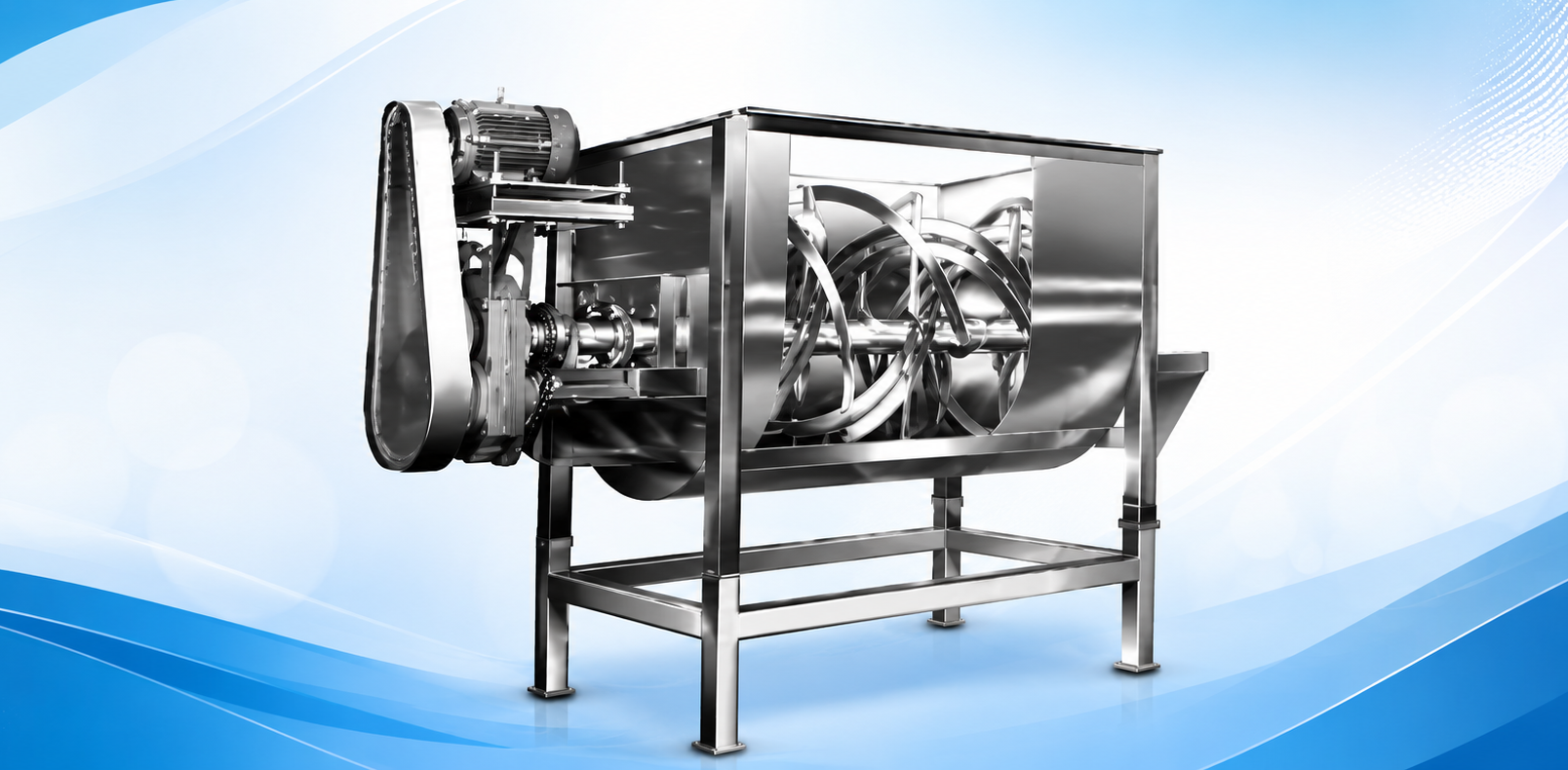
Consistent material blending plays an important role in manufacturing processes where dry ingredients must be combined before further production, storage or packaging. Rama GMP Machineries provides industrial mixing equipment options for businesses looking for a Ribbon Blender Manufacturer In Tripura. A ribbon blender uses a rotating ribbon assembly inside a mixing trough to move compatible powders and granules through the batch. Depending on the material properties and equipment configuration, it may be suitable for applications such as spice blending, detergent production, food ingredient preparation and selected industrial powder processing operations.
The right machine should be selected according to the actual demands of your production process. Material density, particle size, ingredient ratio, flow behaviour and the required level of mixing uniformity can all influence equipment selection. Manufacturers should also assess the usable batch volume, ribbon design, shaft construction, motor and gearbox arrangement and product discharge method. Cleaning access and routine maintenance requirements are important considerations, particularly when equipment is used for repeated production batches. Depending on the application and available model, suitable stainless steel contact surfaces, including SS304 or SS316, may be considered. Confirm the machine's construction, capacity and technical specifications before finalising a purchase.
Businesses in Agartala, Udaipur, Dharmanagar, Kailashahar, Belonia, Ambassa and other parts of Tripura can enquire with Rama GMP Machineries about equipment options for their powder and granule mixing needs. If you are establishing a new processing unit or planning to upgrade an existing production facility, sharing information about your ingredients, target batch size, production frequency and available installation area can help identify relevant configurations. You may also discuss loading arrangements, discharge requirements, cleaning procedures and connections with other machinery in your production line. Before confirming an order, review the proposed machine specifications, dimensions, quotation, applicable taxes, transportation costs, estimated dispatch schedule and warranty terms to make an informed equipment decision.
Enquire About Ribbon Blender Machines in TripuraEffective powder mixing is an important step in production processes that require compatible dry ingredients to be distributed throughout a batch. Rama GMP Machineries offers industrial blending machinery options for businesses exploring a Ribbon Blender Manufacturer In Tripura. Ribbon blenders use an internal agitator within a horizontal mixing trough to move materials and support batch blending. The suitability of a machine depends on the ingredients, expected output, processing conditions and required mixing quality. Reviewing these factors before equipment selection helps manufacturers identify a configuration that fits their production setup and operating objectives.
Each material formulation has its own mixing characteristics. Bulk density, particle size, ingredient ratios and material flow can affect how ingredients move through the blending chamber. Manufacturers should define their batch quantity, production schedule and target blend uniformity before selecting a machine. Other considerations include the internal ribbon design, vessel dimensions, drive mechanism and discharge arrangement. Evaluating these elements together gives buyers a clearer basis for comparing equipment options and planning their production process.
Manufacturing and processing businesses can have different requirements for preparing dry blends before packaging or further production. Companies looking for a Ribbon Blender Manufacturer In Tripura can explore equipment options for compatible materials used in spice preparation, food ingredient blending, detergent production and selected industrial powder applications. The machine should be chosen according to the properties of the actual ingredients and the quality requirements of the finished blend.
Businesses in Agartala, Udaipur, Dharmanagar, Kailashahar and other parts of Tripura may operate with different batch sizes and production arrangements. Some facilities may require a straightforward batch mixing process, while others may need a blender that works alongside material feeders, transfer equipment or packaging systems. Planning the sequence of loading, blending, discharge and material transfer can help buyers establish the appropriate machinery requirements.
Equipment construction should also match the intended working environment. Factors such as material contact surfaces, cleaning access, inspection requirements and maintenance procedures deserve attention during selection. If a particular stainless steel grade, hygienic construction feature or application-specific design is required, discuss it with the supplier and verify it in the technical quotation. The suitability of materials and additional features should be confirmed for the selected model before placing an order.
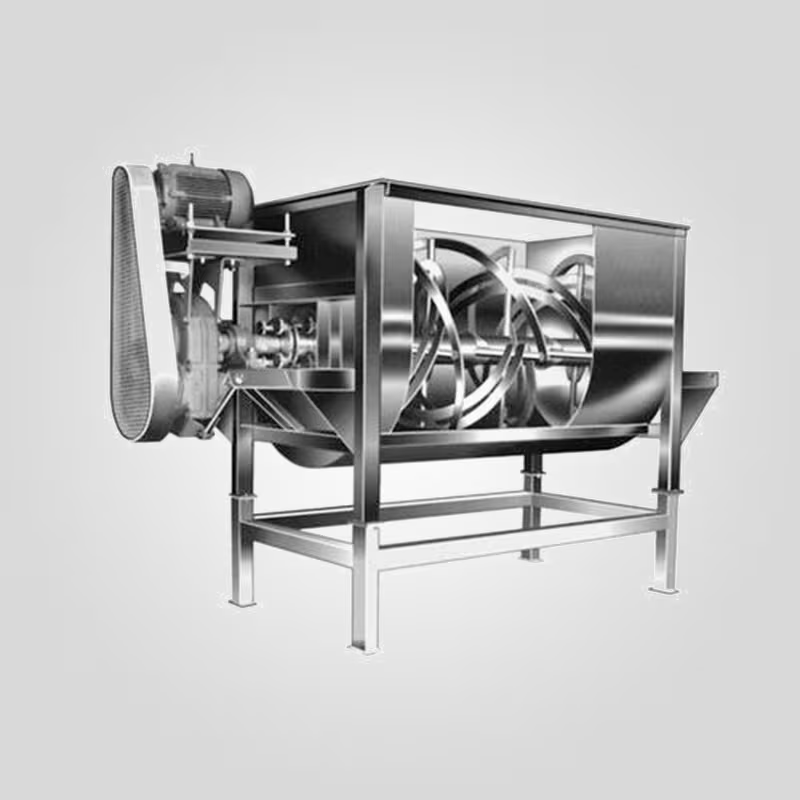
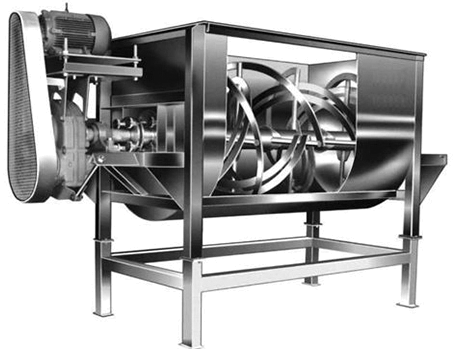
Selecting an appropriate blender capacity helps align equipment with the quantity of material processed during each production cycle. The usable mixing volume depends on the dimensions of the vessel and the physical properties of the ingredients. Materials with different bulk densities can occupy different amounts of space even when their weights are similar. For this reason, buyers should assess both the required batch weight and the recommended working volume instead of relying only on the machine's overall dimensions.
Rama GMP Machineries offers industrial mixing equipment options that can be reviewed against specific processing requirements and confirmed model specifications. Businesses searching for a Ribbon Blender Manufacturer In Tripura can share details about ingredient behaviour, target batch quantity, blending objectives and preferred discharge methods when discussing equipment suitability. Stainless steel contact parts, including SS304 or SS316, may be considered where appropriate for the application and available machine configuration. Always verify the usable capacity, construction materials and operating specifications before confirming a model.
The planned installation area should be reviewed before equipment procurement. Check the blender's dimensions, floor space, electrical requirements and access needed for loading, unloading, inspection and maintenance. If the machine will operate with a conveyor, storage hopper, feeder or packaging line, consider how these components will connect with the proposed setup. Businesses in Tripura should also clarify transportation, unloading arrangements, site preparation and installation responsibilities in advance to support a smoother equipment installation process.
Comparing machinery against a consistent set of technical and commercial criteria helps businesses assess which option best fits their production plans. Request details about the recommended working volume, ribbon configuration, drive specifications, construction material and discharge mechanism. Buyers should also clarify operating guidance, cleaning requirements, routine maintenance and the scope of any warranty or technical assistance. These checks provide a clearer understanding of the proposed equipment and help avoid selecting a machine based only on its initial purchase price.
Businesses seeking a Ribbon Blender Manufacturer In Tripura can contact Rama GMP Machineries to discuss suitable equipment options for their dry powder and granule blending applications. Manufacturers and processing units in Agartala, Udaipur, Dharmanagar, Kailashahar, Belonia, Ambassa and nearby areas can provide their ingredient details, required batch size, expected production frequency and site requirements for an application-focused discussion. Before proceeding with an order, obtain written confirmation of the selected model, technical specifications, final price, applicable taxes, transportation arrangements, estimated dispatch schedule, warranty conditions and any agreed installation or service support.
Preparing a well-distributed mixture is an important stage in manufacturing processes that involve combining compatible dry powders and granulated ingredients. Rama GMP Machineries provides industrial blending equipment options for businesses evaluating a Ribbon Blender Manufacturer In Tripura. A ribbon blender operates through a rotating ribbon assembly positioned inside a horizontal trough, helping move materials through the mixing chamber during a batch cycle. Depending on the ingredients and process conditions, this equipment may be considered for suitable applications in spice preparation, food ingredient blending, detergent production and selected industrial powder operations. Identifying the material characteristics, batch objectives and required mixing quality is an essential first step when assessing machinery for a particular manufacturing process.
A suitable blending system should be evaluated against the practical demands of the production line. Ingredient density, particle size, flow behaviour and formulation proportions can affect how materials move and combine inside the vessel. Manufacturers should compare the recommended working volume, ribbon arrangement, shaft design, drive assembly and discharge mechanism before selecting a model. The way ingredients are loaded and the finished mixture is transferred also deserves consideration, particularly when the blender must work alongside other processing equipment. Cleaning access, inspection procedures and routine maintenance should form part of the evaluation as well. If the application requires specific contact materials or additional construction features, these should be discussed and verified against the proposed machine specifications. A careful review of these factors helps buyers identify equipment that aligns with their operating conditions rather than relying on capacity or price alone.
Businesses across Tripura may have different blending requirements according to their product range, batch sizes and available production space. Manufacturers in Agartala, Udaipur, Dharmanagar, Kailashahar, Belonia, Ambassa and surrounding areas can contact Rama GMP Machineries to discuss equipment options for their intended applications. For a useful initial assessment, provide information about the powders or granules being processed, the target batch weight, production frequency and the desired blending outcome. Details about material loading, discharge arrangements, available installation space and connections with upstream or downstream machinery can further clarify the equipment requirements. Companies searching for a Ribbon Blender Manufacturer In Tripura should request the technical and commercial information needed to assess the proposed configuration. This may include usable batch capacity, construction materials, motor and gearbox specifications, machine dimensions, quotation, applicable taxes, transportation costs, estimated dispatch schedule and warranty conditions. Confirming these details before placing an order helps businesses plan procurement and installation according to their actual production needs.
Consistent ingredient preparation is essential for production units that process dry powders and compatible granules into finished or semi-finished products. Rama GMP Machineries offers industrial mixing equipment options for businesses seeking a Ribbon Blender Manufacturer In Tripura. With a rotating ribbon assembly inside a horizontal mixing chamber, a ribbon blender helps move materials through the batch during the blending cycle. Choosing the right equipment involves understanding the ingredients, required batch volume, process conditions and target mixing quality. Evaluating these factors helps businesses plan their machinery requirements around their actual production operations.
Different ingredients behave differently during mixing, making application assessment an important part of machinery selection. Bulk density, particle size, material flow and formulation ratios can influence the required blending arrangement. Businesses looking for a Ribbon Blender Manufacturer In Tripura can share their material details, target batch quantity and desired mixing outcome with Rama GMP Machineries. These requirements help establish the relevant considerations for vessel volume, ribbon geometry, shaft arrangement, drive system and product discharge. Comparing equipment against these practical requirements can help manufacturers identify an appropriate configuration for their process.
Ribbon blending equipment may be evaluated for suitable dry materials used in spice processing, food ingredient preparation, detergent production and selected industrial formulations. The correct machine depends on ingredient compatibility, production conditions and the required characteristics of the finished mixture. Buyers should examine the mixing trough, internal ribbon assembly, loading arrangement, discharge method and cleaning access. Where the application requires stainless steel contact surfaces, SS304 or SS316 may be considered subject to material suitability and model availability. Confirm the actual construction grade and technical details before purchasing the equipment.
Choosing an appropriate blender size starts with calculating the material quantity handled in each production cycle. Bulk density affects how much space a formulation occupies, so batch weight alone may not determine the required vessel volume. Manufacturers should assess working capacity, batches per shift, expected output and possible changes in future production demand. Rama GMP Machineries provides equipment options that can be reviewed against confirmed model specifications. Businesses in Tripura can discuss their production schedule and material characteristics to help assess suitable machinery. Verify the recommended usable volume for the intended formulation before placing an order.
Integrating mixing equipment into a production facility requires attention to space, material movement and operating access. Businesses in Agartala, Udaipur, Dharmanagar and other Tripura locations should review machine dimensions, floor layout, electrical requirements and sufficient room for loading, unloading, cleaning and maintenance. If the blender will connect with feeders, conveyors, storage hoppers or packaging equipment, the transfer arrangement should be considered before finalising the layout. Buyers should also confirm transportation costs, unloading responsibilities, estimated delivery schedules and any agreed installation assistance before approving the purchase.
A successful machinery selection process begins with clearly defined application requirements and an understanding of the intended production workflow. Compare ribbon blender options by reviewing working volume, ribbon configuration, construction materials, motor and gearbox specifications, discharge design, cleaning access and maintenance needs. Businesses searching for a Ribbon Blender Manufacturer In Tripura can contact Rama GMP Machineries to discuss equipment requirements for compatible powder and granule blending applications. Manufacturing and processing businesses in Agartala, Udaipur, Dharmanagar, Kailashahar, Belonia, Ambassa and surrounding areas can provide details about their ingredients, batch targets, production frequency and available installation space to help assess relevant machinery options. Before confirming an order, request written details of the proposed model, usable capacity, technical specifications, construction materials, commercial quotation, applicable taxes, freight arrangements, estimated dispatch timeline and warranty terms. Clarify any installation and technical support arrangements separately to ensure the selected equipment meets your operational expectations.
Manufacturers handling dry raw materials require reliable blending equipment to prepare consistent mixtures for their production processes. Whether a business works with food ingredients, household cleaning products or selected industrial powders, the right mixing arrangement can help streamline batch preparation and material handling. Rama GMP Machineries offers industrial mixing equipment options for businesses looking for a Ribbon Blender Manufacturer In Tripura. A ribbon blender combines compatible powders and granules through a rotating ribbon assembly inside a horizontal mixing vessel. Choosing the right equipment requires an assessment of material properties, ingredient ratios, required batch capacity, mixing time and discharge arrangements. These factors help manufacturers determine a configuration that suits their operational needs across Tripura.
Food processing businesses often need to combine several dry ingredients in controlled proportions before moving to packaging or subsequent production stages. For compatible materials, ribbon blenders can be evaluated for spice mixtures, seasoning powders, flour blends, bakery premixes and other dry food preparations. The equipment should be selected according to the recipe, ingredient particle size, bulk density and the required degree of distribution throughout each batch. Manufacturers should also consider cleaning access, product contact surfaces and the handling requirements of their specific ingredients. Food businesses in Agartala, Udaipur, Belonia and surrounding areas can explore suitable blending equipment options from Rama GMP Machineries. Reviewing the actual application before final selection helps establish whether the proposed machine meets the intended processing and maintenance requirements.
Businesses working with nutritional ingredients and specialised dry formulations need mixing equipment that matches their product handling procedures and production standards. A ribbon blender may be considered for suitable dry ingredients when the machine design, mixing action and construction are compatible with the application. Before purchasing equipment, manufacturers should evaluate the sensitivity of the ingredients, the required mixing uniformity, batch size, discharge method and cleaning procedure. Where a process involves pharmaceutical or regulated products, additional technical and compliance requirements must be reviewed separately. Rama GMP Machineries can discuss general ribbon blender configurations with manufacturers and processing businesses in Agartala, Dharmanagar, Kailashahar and other parts of Tripura. The final equipment choice should follow a technical review of the intended materials, operating conditions and applicable production requirements.
Industrial units require effective methods for combining dry materials used in cleaning products, mineral preparations and other compatible manufacturing applications. Depending on the material characteristics, ribbon mixing equipment can be assessed for detergent formulations, selected mineral powders and specialty dry blends. Important selection factors include material flow, abrasiveness, dust formation, moisture sensitivity and the required production rate. Manufacturers should also review the mixing vessel design, ribbon arrangement, drive capacity and discharge mechanism to ensure they align with the planned batch size. Construction material, corrosion resistance and access for routine inspection should be considered wherever relevant. Businesses searching for a Ribbon Blender Manufacturer In Tripura can discuss their processing requirements with Rama GMP Machineries to evaluate appropriate machine options and configurations.
An effective ribbon blending setup begins with understanding the complete production requirement rather than selecting a machine on capacity alone. Manufacturers should review working batch volume, vessel dimensions, ribbon configuration, motor specifications, material discharge and expected operating frequency. Depending on the model and intended application, suitable construction materials and stainless steel product-contact options may also be evaluated. Rama GMP Machineries offers ribbon blender equipment options based on the technical details and processing needs shared by each business. Companies looking for a Ribbon Blender Manufacturer In Tripura can provide information about the materials to be mixed, target batch quantity, ingredient characteristics, available installation space and expected production schedule. Businesses in Agartala, Udaipur, Dharmanagar, Kailashahar, Belonia and Ambassa can enquire about available machine configurations, specifications, pricing, transportation and estimated delivery timelines before finalising an equipment purchase.
Preparing a well-distributed dry mixture requires equipment that matches the ingredients, batch size and production method. Rama GMP Machineries offers industrial mixing equipment options for businesses searching for a Ribbon Blender Manufacturer In Tripura. A ribbon blender works through a rotating ribbon assembly inside a horizontal vessel, moving compatible powders and granules during batch processing. Machine selection should consider the material formulation, required working volume, mixing objectives and operating conditions.
Tripura's food businesses, small-scale manufacturing units and industrial processing facilities may have different requirements for preparing dry ingredients and handling finished mixtures. Production processes can vary in terms of batch frequency, cleaning procedures, material transfer and packaging needs. Understanding these differences helps businesses evaluate equipment that fits their actual workflow.
Depending on material properties and equipment suitability, ribbon blenders may be evaluated for spice mixtures, dry food ingredients, detergent powders, botanical materials and selected industrial formulations. Buyers should review particle size, bulk density, flow behaviour, moisture sensitivity and product-contact requirements. Vessel construction, cleaning access and discharge arrangements should also be assessed before selecting a machine.
Businesses in Agartala, Udaipur, Dharmanagar, Kailashahar, Belonia and Ambassa can contact Rama GMP Machineries to discuss their blending requirements. Sharing details about the ingredients, target batch weight, production frequency, installation space and preferred construction can help initiate an equipment enquiry covering available models, technical specifications, pricing and delivery arrangements.
Selecting a suitable mixer requires an understanding of how raw materials behave during processing and what the finished batch must achieve. Rama GMP Machineries provides equipment options for companies looking for a Ribbon Blender Manufacturer In Tripura. The horizontal vessel and rotating ribbon assembly are designed to move compatible dry ingredients through a batch. The final machine configuration should reflect the material characteristics, required working load and production objectives.
Equipment priorities differ from one application to another. Food ingredient processors may need convenient cleaning access and manageable formulation changeovers, while industrial powder manufacturers may focus on material compatibility, discharge performance and production capacity. Identifying these requirements early helps buyers compare machine features more effectively.
Depending on the available models, approximate batch capacities ranging from 10 kg to 1000 kg may be considered. The suitable working load depends on material bulk density, usable vessel volume, ingredient behaviour and mixing requirements. Production planning should include raw material loading, blending, discharge, cleaning and changeover time where different formulations are handled.
Manufacturing and processing businesses in Agartala, Dharmanagar, Udaipur and other Tripura locations can enquire about ribbon blender configurations from Rama GMP Machineries. Providing accurate information about the ingredients, expected output, factory layout and material-handling process helps determine which machine specifications should be reviewed before purchase.
Industrial mixing equipment should be selected after evaluating the formulation, production target and practical requirements of the installation site. Rama GMP Machineries offers machinery options for businesses considering a Ribbon Blender Manufacturer In Tripura. Buyers can compare working capacity, vessel dimensions, ribbon arrangement, drive specifications and discharge design to identify equipment that may suit their manufacturing process.
Start by documenting the ingredients and their proportions. Establish the target batch weight, number of batches required per shift and desired characteristics of the finished mixture. Raw material feeding, product collection, cleaning procedures and integration with other machinery should also be considered. A complete review of these factors helps align equipment selection with the actual production workflow.
Calculate the expected batch quantity using material bulk density, usable vessel volume and production targets. Depending on model availability, approximate capacities from 10 kg to 1000 kg per batch may be considered. Include charging, mixing, unloading and cleaning time when estimating output per shift. Ask the supplier to confirm the recommended working load for your specific ingredients before finalising a machine.
Particle size, density, flowability, moisture content and ingredient proportions can influence the mixing process. Explain the required blending result and any application-specific uniformity expectations. If ingredients have substantially different physical characteristics, request a technical review of their compatibility with the proposed mixing arrangement before selecting the equipment.
Vessel and contact materials should suit the ingredients, operating environment and cleaning method. SS304 or SS316 stainless steel may be considered for suitable applications, depending on model availability and technical requirements. Review corrosion resistance, surface finish, residue removal and inspection access. Confirm the specified material grade and construction details in the final equipment documentation.
The drive system should match the selected vessel, expected load and material characteristics. Evaluate the motor rating, gearbox arrangement, electrical supply and available controls before ordering. Maintenance access and the installation environment also matter. Confirm the machine's electrical requirements against the infrastructure available at your Tripura facility.
The outlet arrangement should support the next production stage, whether the mixture is collected in containers, transferred into a hopper or moved towards packaging equipment. Review outlet position, receiving space, floor clearance and any conveyor connections. Planning the material-transfer route in advance helps identify potential layout or handling difficulties before installation.
Measure the available floor area and check machine height, loading clearance, discharge space and electrical connections. Operators should have suitable access for inspection, cleaning and routine servicing. Businesses across Tripura should discuss site preparation, transport access, installation responsibilities and estimated delivery timelines with the supplier before confirming an order.
Choosing a ribbon blender involves matching the equipment to the formulation, batch requirements and factory conditions. If you are looking for a Ribbon Blender Manufacturer In Tripura, contact Rama GMP Machineries with information about the materials, required batch quantity, cleaning procedure and installation layout. Enquire about available models, confirmed working capacity, technical documentation, quotations and transportation arrangements before selecting the final configuration.
Many production processes require dry ingredients to be combined before further processing, storage or packaging. Rama GMP Machineries offers blending equipment options for businesses searching for a Ribbon Blender Manufacturer In Tripura. A rotating ribbon mechanism moves compatible materials within a horizontal mixing vessel to support batch preparation. The suitable machine depends on the formulation, intended working volume and operating conditions.
Based on material compatibility and machine specifications, ribbon blenders may be considered for spice powders, dry food premixes, botanical ingredients, detergent formulations and selected industrial compounds. Each application needs an individual review of product characteristics, construction requirements, cleaning access, discharge design and safe handling procedures.
Manufacturers and processing businesses in Agartala, Udaipur, Dharmanagar, Kailashahar, Belonia and Ambassa can discuss their mixing requirements with Rama GMP Machineries. Details about ingredient composition, proportions, target batch size and downstream processing help establish which equipment specifications should be evaluated.
Food processing businesses may evaluate ribbon blenders for compatible spice blends, seasoning powders, flour mixtures and selected dry premixes. Equipment selection should take ingredient ratios, particle distribution, bulk density and moisture sensitivity into account. Product-contact construction and cleaning access should suit the intended food-processing procedure. Confirm the proposed machine's suitability for the formulation and cleaning requirements before introducing it into production.
Businesses handling dried botanical materials may need to combine compatible powders before further manufacturing or packaging. Differences in particle size, density, flow characteristics and moisture content should be considered during equipment selection. Where several formulations use the same machine, cleaning access and residue removal become important planning factors. Review the intended ingredients and batch consistency requirements before approving a configuration.
Some nutritional and pharmaceutical-related processes involve combining compatible powdered ingredients into defined formulations. Buyers should evaluate product-contact materials, cleaning methods, batch traceability and process documentation needs. Facilities operating under regulated manufacturing systems must independently verify the applicable standards, validation expectations and supporting documentation before approving equipment for a specific regulated use.
Industrial processors may assess ribbon blenders for compatible dry chemical formulations and selected mineral mixtures. Important factors include abrasiveness, corrosion potential, dust formation and material-handling precautions. The vessel, ribbon assembly, seals, drive components and discharge arrangement should suit the intended application. Reactive, hazardous or corrosive materials require a dedicated engineering and safety review before equipment suitability can be established.
Detergent production may involve combining multiple dry ingredients before packaging or subsequent processing. A ribbon blender can be evaluated where the materials are compatible with the mixing mechanism and machine construction. Buyers should consider working capacity, discharge efficiency, dust management, cleaning access and servicing requirements. These factors help determine whether the proposed equipment fits the planned production sequence.
Certain personal care manufacturing processes require compatible dry ingredients to be blended into specified formulations. Equipment should be evaluated according to ingredient characteristics, mixing objectives, contact surfaces and cleaning needs. When multiple formulations are processed, review changeover procedures and residue removal. Confirm the machine's suitability and required construction details before integrating it into the production line.
The appropriate ribbon blender depends on the materials, production targets and intended operating conditions. Businesses looking for a Ribbon Blender Manufacturer In Tripura can contact Rama GMP Machineries to discuss application-specific requirements. Depending on model availability, approximate capacities from 10 kg to 1000 kg per batch may be considered. Review ribbon design, vessel construction, discharge arrangements and cleaning access before confirming the equipment.
A suitable mixing machine should support the manufacturing process while meeting the practical requirements of the facility. Rama GMP Machineries offers equipment options for businesses evaluating a Ribbon Blender Manufacturer In Tripura. Comparing capacity, machine construction, drive specifications, material compatibility and servicing requirements provides a clearer basis for assessing available models.
Consider the complete batch cycle, including ingredient loading, blending, discharge, cleaning and transfer to the next production stage. Vessel dimensions, ribbon arrangement, motor performance, product-contact materials and maintenance accessibility should be evaluated together. The proposed machine must also fit the factory layout and any connected material-handling equipment.
Prepare a description of the ingredients, particle characteristics, bulk density, flow behaviour, moisture sensitivity and relevant chemical properties. Abrasive or corrosive materials may require specific construction considerations. Share these details with Rama GMP Machineries so the proposed equipment can be assessed against the intended formulation and operating conditions.
Capacity planning should consider material density, usable vessel volume, target batch weight and expected production frequency. Depending on available models, approximate capacities from 10 kg to 1000 kg per batch may be considered. Include charging, blending, unloading and cleaning time when estimating output. Confirm the recommended working load for your actual ingredients before placing an order.
Review the mixing chamber dimensions, ribbon arrangement, shaft design, outlet position and cleaning access. The configuration should correspond to the material characteristics, required mixing result and maintenance needs. Request available technical drawings and specifications to check machine dimensions and installation clearances before approving the design.
The motor and gearbox should suit the selected vessel and expected operating load. Review motor rating, drive arrangement, electrical supply and control requirements. Maintenance access and the surrounding environment should also be considered. Confirm the equipment's electrical specifications against the installation infrastructure available at your facility in Tripura.
The discharge arrangement should match the next step of the manufacturing process. Consider outlet location, receiving containers, available floor clearance and possible connections to conveyors or hoppers. If the blender will supply packaging or other processing equipment, assess the complete transfer arrangement before finalising the installation layout.
Check the machine footprint, overall height, loading space, electrical connections and discharge clearance. Allow sufficient access for inspection, cleaning and routine maintenance. Buyers in Tripura should discuss site preparation, transportation access, installation responsibilities and estimated delivery timelines with the supplier before confirming an order.
Selecting suitable blending equipment requires a clear assessment of materials, production goals and site conditions. If you need a Ribbon Blender Manufacturer In Tripura, contact Rama GMP Machineries with details about the formulation, required batch weight, preferred construction and factory layout. Enquire about available models, confirmed capacity, technical specifications, quotations and transportation options. Review the final configuration and commercial terms before placing your order.
Consistent batch preparation begins with selecting a mixer that suits the physical properties of the raw materials and the expected production outcome. Rama GMP Machineries offers blending equipment options for businesses searching for a Ribbon Blender Manufacturer In Tripura. A horizontal mixing vessel with a rotating ribbon assembly moves compatible dry ingredients during processing. Equipment selection should reflect the formulation, working load and intended operating conditions.
Start by identifying the ingredients, their proportions, particle distribution, bulk density and moisture behaviour. Establish the target batch quantity, expected batches per shift and the method used to collect the finished mixture. This information helps determine which vessel dimensions, ribbon arrangement, drive specifications and discharge features should be considered.
Construction materials must be compatible with the ingredients and cleaning procedure. SS304 or SS316 product-contact surfaces may be evaluated for appropriate applications, depending on model availability and technical suitability. Verify material grades, surface finish, residue-removal provisions and other construction details before approving the equipment.
A blending machine should fit into the full production sequence, from raw material charging to mixing, discharge and subsequent processing or packaging. Businesses looking for a Ribbon Blender Manufacturer In Tripura should compare the proposed machine configuration with their actual production requirements instead of considering nominal capacity alone.
Installation planning should include available floor space, machine height, loading access, electrical connections and finished-product collection. If the blender will operate alongside weighing equipment, feeders, hoppers, conveyors or packaging systems, review the complete arrangement before deciding where the machine will be installed.
Processing businesses in Agartala, Udaipur, Dharmanagar, Kailashahar, Belonia and Ambassa can contact Rama GMP Machineries to discuss ribbon blender options. Depending on model availability, approximate capacities from 10 kg to 1000 kg per batch may be considered. Share your production requirements to enquire about suitable configurations, technical information and pricing.
Prepare an equipment requirement brief covering the ingredients, target batch weight, production frequency, cleaning procedure and installation conditions. Contact Rama GMP Machineries to enquire about available ribbon blender models, working capacities, construction options, technical specifications, quotations and delivery arrangements for your Tripura facility. Confirm application suitability, model availability and final commercial terms before placing an order.
Understanding raw material behaviour is an important step when selecting industrial mixing equipment. Rama GMP Machineries offers machinery options for companies looking for a Ribbon Blender Manufacturer In Tripura. Ribbon blenders use a rotating mixing assembly within a horizontal chamber to move compatible dry ingredients. The appropriate configuration depends on the formulation, required batch quantity and intended production conditions.
Important selection factors include ingredient composition, particle size, bulk density, flow characteristics and moisture sensitivity. Manufacturers should also define their expected output, batch frequency and finished-product requirements. These details help identify which machine capacity, ribbon arrangement and discharge design should be evaluated.
Depending on material compatibility, ribbon blenders may be considered for spice mixtures, dry food ingredients, herbal powders, detergent formulations and selected industrial materials. Every proposed use should be assessed for product compatibility, contact-surface requirements, cleaning accessibility and safe operating conditions before the equipment is selected.
The mixing vessel, ribbon assembly, drive system and outlet mechanism all influence how a blender fits into the manufacturing process. Rama GMP Machineries offers equipment options that can be discussed according to the intended application and available models. Buyers searching for a Ribbon Blender Manufacturer In Tripura should review working capacity, vessel dimensions, contact materials and discharge design before choosing a configuration.
Construction requirements depend on the materials being processed and the cleaning methods used at the facility. SS304 or SS316 product-contact construction may be considered for suitable applications, subject to availability and technical compatibility. If a process requires specific hygiene provisions, material grades or documentation, confirm these requirements with the supplier before ordering.
Evaluate the proposed machine location, raw material loading route, finished-product collection area and maintenance clearance. Where conveyors, hoppers or packaging systems are involved, review the complete material-transfer arrangement. Businesses in Agartala, Udaipur, Dharmanagar and other Tripura locations can enquire about available configurations, machine dimensions and technical specifications.
Industrial mixing equipment should be selected with a clear understanding of the raw materials, production objectives and factory workflow. Rama GMP Machineries offers ribbon blender options for businesses searching for a Ribbon Blender Manufacturer In Tripura. These machines use a rotating ribbon assembly inside a horizontal vessel to move compatible dry ingredients during batch preparation. The final configuration should match the formulation and intended operating conditions.
Review ingredient composition, particle distribution, bulk density, flowability and moisture sensitivity before comparing available models. Establish the required batch weight, production frequency and desired characteristics of the finished mixture. If a process requires particular blending uniformity, discuss the application requirements and suitable evaluation methods before confirming the equipment.
Capacity planning should reflect material density, usable vessel volume and the production schedule. Depending on model availability, approximate capacities from 10 kg to 1000 kg per batch may be considered. The complete production cycle should include ingredient loading, blending, discharge, cleaning and changeover time when multiple formulations are processed.
Vessel construction, ribbon assembly, shaft, seals, drive components and discharge parts should be suitable for the intended materials. SS304 or SS316 product-contact options may be evaluated for appropriate applications, subject to availability and technical requirements. Confirm the specified material grade, construction details and relevant equipment documentation before finalising a purchase.
Businesses in Agartala, Udaipur, Dharmanagar, Kailashahar, Belonia and Ambassa can enquire about ribbon blender options for compatible dry food ingredients, spice blends, botanical powders, detergent products and selected industrial formulations. Material compatibility, cleaning procedures and safe handling conditions should be assessed for each intended application.
A ribbon blender may form part of a wider manufacturing line that includes weighing equipment, feeding systems, storage hoppers, conveyors or packaging machinery, where the configuration permits. Installation planning should account for floor space, machine height, loading access, discharge clearance, electrical requirements and routine servicing provisions. Reviewing these details helps establish how the equipment can fit into the existing factory workflow.
Compare available models by reviewing working capacity, vessel dimensions, ribbon arrangement, motor and gearbox specifications, contact materials and cleaning accessibility. The final choice should be based on the actual formulation and operating environment. Discuss these requirements with Rama GMP Machineries to identify which available equipment specifications need further consideration.
If your business is searching for a Ribbon Blender Manufacturer In Tripura, share the ingredient details, target batch quantity, production schedule, preferred construction and installation layout with Rama GMP Machineries. Enquire about available models, technical specifications, capacity options, quotations and transportation arrangements before confirming your order.
Choosing a suitable blender begins with defining the intended application and understanding the characteristics of the materials being processed. Rama GMP Machineries offers equipment options for businesses looking for a Ribbon Blender Manufacturer In Tripura. The horizontal mixing vessel and rotating ribbon mechanism move compatible dry ingredients during batch preparation. Equipment selection should reflect the formulation, working volume and production environment.
Before requesting a quotation, document the ingredient composition, proportions, particle characteristics, bulk density and expected production frequency. Identify the target batch quantity, desired mixing result and finished-product handling method. These details help establish which vessel dimensions, ribbon configuration, drive arrangement and discharge features should be assessed.
Available capacities and construction options should be evaluated according to the application. Depending on model availability, approximate capacities from 10 kg to 1000 kg per batch may be considered. Ask for details about the recommended working load, machine dimensions, product-contact materials and cleaning provisions before approving a proposed configuration.
Businesses in Agartala, Udaipur, Dharmanagar, Kailashahar, Belonia and Ambassa can contact Rama GMP Machineries to discuss equipment requirements. Provide formulation details, production targets, preferred construction and factory layout to enquire about available models, technical specifications and quotations.
Manufacturing facilities need mixing machinery that matches their raw materials, production goals and downstream processing requirements. Rama GMP Machineries offers equipment options for businesses searching for a Ribbon Blender Manufacturer In Tripura. A ribbon blender uses a rotating assembly within a horizontal vessel to move compatible dry ingredients. The appropriate machine should suit the formulation, working capacity and intended operating conditions.
Different production applications have different equipment priorities. Food ingredient processors may focus on cleaning accessibility and formulation changeovers, while industrial powder manufacturers may place greater emphasis on batch throughput, material compatibility and discharge performance. Assess particle size, bulk density, flow behaviour, ingredient ratios and production frequency before comparing available models.
Review vessel dimensions, ribbon design, drive specifications, product-contact construction and the discharge mechanism when assessing equipment. Depending on model availability, approximate capacities from 10 kg to 1000 kg per batch may be considered. Obtain confirmation of the recommended working load and proposed machine configuration before ordering.
Businesses in Agartala, Udaipur, Dharmanagar, Kailashahar, Belonia and other Tripura locations can enquire about ribbon blenders for compatible applications. Consider how the equipment will fit into raw material charging, batch mixing, finished-product collection and packaging. Floor space, electrical supply and maintenance access should be reviewed during installation planning.
A detailed equipment enquiry helps identify configurations that may suit a specific manufacturing process. Businesses looking for a Ribbon Blender Manufacturer In Tripura should establish the materials, target batch weight, production schedule and operating conditions. Rama GMP Machineries can be contacted to discuss available equipment options and relevant technical requirements.
Prepare information about the formulation, ingredient proportions, expected batch frequency and finished-product handling method. Include cleaning procedures, preferred construction materials and any application-specific requirements. If the blender will connect with feeders, weighing systems, conveyors, storage hoppers or packaging machinery, describe the planned production-line arrangement.
Compare each proposed model by reviewing working capacity, vessel dimensions, ribbon arrangement, motor and gearbox specifications, discharge design and product-contact materials. Applications with particular hygiene or regulated-production requirements should confirm the necessary construction provisions, documentation and cleaning arrangements before equipment approval.
Contact Rama GMP Machineries to enquire about ribbon blender models and configurations for your Tripura facility. Request details about available capacities, construction options, technical specifications, quotations and delivery arrangements. Share your production requirements for an application-based equipment discussion, and confirm machine suitability, availability and final commercial terms before placing an order.
Selecting an industrial ribbon blender involves understanding the materials to be processed, the required batch output and the working conditions of the manufacturing unit. Rama GMP Machineries offers equipment options for businesses exploring dry powder and granule mixing solutions. These frequently asked questions explain important considerations related to machine capacity, industrial applications, construction materials, cleaning, maintenance and purchasing decisions. If you are comparing a Ribbon Blender Manufacturer In Tripura, the following information can help you prepare a more informed equipment enquiry for your production requirements.
A ribbon blender is designed to mix compatible dry powders and granules inside a horizontal vessel. Its rotating ribbon assembly moves materials through the chamber to help distribute ingredients during batch processing. Performance depends on factors such as particle size, bulk density, ingredient proportions and the selected operating conditions. Businesses looking for a Ribbon Blender Manufacturer In Tripura can approach Rama GMP Machineries to discuss their formulation, production targets and equipment requirements. Reviewing the intended application helps determine whether a proposed ribbon blender configuration is appropriate for the materials being processed.
Begin by identifying the materials, ingredient proportions, required batch weight and expected production frequency. Evaluate the vessel dimensions, ribbon arrangement, motor and gearbox specifications, discharge mechanism and product-contact construction. The available installation space, loading method, electrical supply, cleaning procedure and maintenance access also matter. Businesses in Agartala, Udaipur, Dharmanagar, Kailashahar and other Tripura locations can share these details with Rama GMP Machineries to enquire about suitable models, technical specifications, quotations and delivery arrangements.
Depending on material compatibility and equipment design, ribbon blenders may be considered for spice mixtures, dry food ingredients, detergent powders, botanical materials and selected industrial formulations. Certain nutraceutical, cosmetic and pharmaceutical-related processes may also require suitable dry mixing equipment. Every application needs an individual review of ingredient properties, cleaning practices, product-contact materials and the required blending outcome. Businesses should explain their actual formulation to Rama GMP Machineries before deciding whether a particular machine is suitable for their production process.
Capacity planning should consider the target material weight, bulk density, usable vessel volume and production schedule. The nominal vessel volume is not necessarily equal to the recommended working load. Depending on available models, approximate capacities from 10 kg to 1000 kg per batch may be considered, subject to technical confirmation. Also account for material charging, mixing, unloading, cleaning and changeover time when estimating daily output. Share your material details and required production quantity with Rama GMP Machineries to discuss an appropriate capacity range.
Review the working capacity, vessel dimensions, ribbon configuration, shaft arrangement, motor rating, gearbox details and outlet design. Product-contact material grades, cleaning accessibility, operating safeguards and maintenance requirements should also be checked. For installation within an existing production line, verify the machine footprint, loading height, discharge clearance and electrical compatibility. When evaluating a Ribbon Blender Manufacturer In Tripura, request the technical specifications for the actual model being offered and confirm that its configuration matches your intended application before placing an order.
The ribbon arrangement influences how materials move through the mixing vessel during operation. Its suitability depends on ingredient density, particle characteristics, flow behaviour, proportions and the intended blending result. Formulations with significantly different physical properties may need additional process assessment. Explain the ingredients, target batch weight and desired mixture characteristics to Rama GMP Machineries so the proposed machine design can be reviewed against your requirements. Confirm the offered ribbon configuration and related technical details before approving the order.
Consistent results depend on controlled ingredient measurement, repeatable loading procedures and suitable operating practices. Material properties such as particle size, moisture, bulk density and flow behaviour can influence the finished mixture. Manufacturers should establish documented batch procedures and appropriate product quality checks. Where uniformity is important, determine a suitable sampling and testing method for the formulation. Discuss the expected result with the equipment supplier and evaluate whether the proposed machine configuration and process settings are suitable for the application.
SS304 and SS316 stainless steel may be considered for suitable product-contact applications, depending on the materials, cleaning chemicals and operating environment. The required grade should be established according to the formulation and relevant technical requirements. Buyers should verify the material specifications for the vessel, ribbon assembly and other product-contact components rather than assuming that all machine parts use the same grade. Contact Rama GMP Machineries to discuss construction preferences and confirm the offered material grade, surface finish and model availability.
One ribbon blender may be considered for multiple compatible formulations when its construction, operating capability and cleaning arrangements meet the needs of each product. Differences in particle size, density, moisture sensitivity and flow characteristics can affect the mixing process. Thorough cleaning and residue removal are important when switching between formulations, especially where specific quality or hygiene controls apply. Provide Rama GMP Machineries with details of the intended products and changeover procedures to discuss whether a common machine configuration may be appropriate for your operations.
The motor and gearbox should suit the vessel dimensions, expected working load, material properties, ribbon design and operating cycle. Drive selection needs to account for the mechanical demands of the proposed equipment. Before purchasing, review motor power, gearbox arrangement, electrical supply, available controls and servicing access. Share the batch quantity and material characteristics with Rama GMP Machineries and request confirmation of the proposed drive specifications and relevant operating safeguards.
Integration may be possible when the blender's loading arrangement, discharge position, dimensions and working capacity suit the planned production line. Depending on the application, a ribbon blender may operate alongside weighing equipment, feeders, storage hoppers, conveyors and packaging machinery. Check transfer heights, outlet positions, floor clearance and maintenance access before confirming the layout. Businesses establishing or upgrading production facilities in Tripura should share their process flow and installation layout to assess the equipment integration requirements.
Maintenance should follow the equipment manufacturer's instructions and suit the machine's operating conditions. Routine checks may include the ribbon assembly, shaft, bearings, seals, gearbox, drive components and discharge mechanism. Cleaning procedures must be compatible with the processed ingredients and construction materials. Investigate unusual vibration, noise, leakage or changes in operating behaviour promptly. Before inspection, cleaning or servicing, isolate the power supply and follow the prescribed safety procedure. Regular inspection and maintenance records help monitor equipment condition over time.
Businesses in Agartala, Udaipur, Dharmanagar, Kailashahar, Belonia, Ambassa and nearby areas can contact Rama GMP Machineries to discuss their blending equipment requirements. During the enquiry, share the intended application, target batch capacity, material details and delivery destination. Transportation charges, dispatch timelines and installation arrangements depend on the order and destination. Confirm current model availability, delivery options and any installation support directly with the company.
Provide the ingredient names, approximate bulk density, required batch weight and expected production frequency. Include the desired mixing result, preferred construction material, discharge method and cleaning procedure. Mention any relevant hygiene, documentation or regulated-production requirements. Factory dimensions and electrical supply details can help clarify installation needs. Request a quotation that identifies the proposed model, working capacity, construction details, technical specifications, commercial terms, estimated delivery schedule and applicable warranty conditions.
Businesses searching for a Ribbon Blender Manufacturer In Tripura can contact Rama GMP Machineries through its official website: ramagmpmachineries.co.in . Share the intended application, required batch capacity, material specifications and delivery location to enquire about suitable equipment options. Request a quotation covering the proposed configuration, applicable taxes, transportation charges, estimated dispatch schedule and warranty terms. Pricing can vary according to machine capacity, construction materials and design requirements. Confirm current pricing, model availability, final specifications and delivery arrangements directly with the company before placing your order.
Consistent blending plays an important role in manufacturing processes where different dry ingredients must be combined before packaging, further processing or bulk handling. Rama GMP Machineries offers industrial ribbon blender equipment options for businesses evaluating machinery for their powder and granule mixing operations. Companies looking for a Ribbon Blender Manufacturer In Tripura can explore suitable configurations based on ingredient characteristics, batch requirements and the intended production output. Ribbon blenders can be considered for compatible applications involving food ingredients, chemical powders, mineral blends, pharmaceutical raw materials and other dry-processing materials, depending on the process. Equipment selection should take into account the working volume, ribbon geometry, mixing trough design, motor and gearbox arrangement, discharge method and material of construction. A careful assessment of these factors helps manufacturers choose a blending system suited to their workflow, available installation space and operational requirements. Reviewing the machine specifications before purchase also supports better production planning and informed equipment decisions.
Choosing the right ribbon blender starts with understanding
how the materials behave during mixing. Differences in
particle size, bulk density, flowability and ingredient
ratios can affect the blending process and the equipment
configuration required. Businesses should identify their
target batch quantity, production frequency and desired
mixing results before comparing available machinery. The
ribbon arrangement, vessel dimensions, shaft assembly,
drive specifications and discharge opening should all be
reviewed alongside routine cleaning and maintenance
requirements. Rama GMP Machineries can help prospective
buyers evaluate relevant machine options using the details
provided about their application and the specifications
available for the proposed equipment. Depending on the
material being processed, stainless steel construction
options such as SS304 or SS316 may also be considered,
subject to model availability and suitability for the
intended application. Buyers should verify the final
construction, usable capacity and technical configuration
before confirming an order.
Businesses operating in Agartala, Udaipur, Dharmanagar,
Kailashahar, Belonia, Ambassa, Khowai, Bishalgarh, Sonamura
and Sabroom can enquire about ribbon blender equipment for
their processing requirements. When contacting a supplier,
share the type of powder or granules involved, approximate
batch weight, expected production volume and available
installation area. Details about ingredient loading,
finished-batch discharge, cleaning access and connection
with existing machinery can help narrow down suitable
equipment choices. Before purchasing, request a clear
quotation covering the proposed model, usable batch
capacity, construction material, motor and gearbox details,
applicable taxes, transportation costs, estimated dispatch
schedule, warranty conditions and available after-sales
support. Comparing these specifications with your actual
manufacturing needs helps make the selection process more
practical and supports better planning for equipment
installation and everyday operation.

